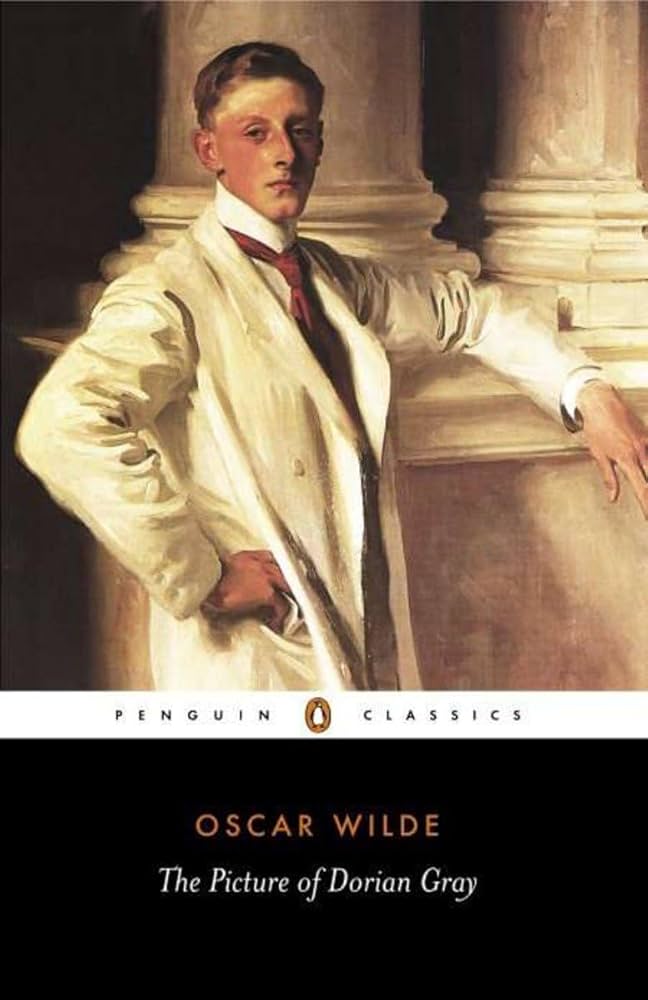
Source: Google Images
How far does our vulnerability go? As humans, we are susceptible to many factors in our lives, yet many of us struggle to cope with these emotions. Sometimes, these feelings leave us feeling unstable. Often, it’s a battle within ourselves, as we confront our true emotions in certain moments or situations.
Hiding our deepest emotions and feeling fear and anxiety when they arise can become habitual, making this behavior increasingly common.
We often polish our outer selves to impress others—trying to be someone we’re not and letting go of our authentic selves in the process. But at what cost?
In the classic novel The Picture of Dorian Gray by Oscar Wilde, human vulnerability is illustrated through the character of Dorian Gray, a young man who is handsome and seemingly virtuous but becomes entangled in a cycle of moral decay and ends up hurting those around him, including his loved ones.
This timeless book, published in 1890, prompts us to reflect on mental health, superficial beauty, and the fleeting nature of life.
A glimpse into the narrative of Oscar Wilde

Source: Pinterest
Let’s start by getting to know the book better. We are in England during the Victorian era of the 19th century. Basil, a painter and friend of Dorian Gray, begins the story by discussing the beautiful young man who has agreed to be his muse for their mutual friend, Henry.
Basil’s muse is Dorian Gray, and from the very beginning, Dorian’s characteristics stand out. He is snobbish and very aware of his appearance; for him, beauty is the most important thing in life. Basil, the painter, tells Dorian the truth: like all humans, Dorian will eventually grow old, and his beauty will not last forever.
Once the painting is completed and Dorian gazes upon his own image, he makes the infamous Faustian pact, vowing to do whatever it takes to remain young while letting the painting bear the consequences of his life and aging.
The book contains many plot twists and intriguing outcomes. I don’t want to give any spoilers, so I highly recommend reading it to discover what happens to Dorian Gray and his painting after he becomes a “symbol” of eternal youth.

Source: Pinterest
In the 21st century, ‘eternal youth’ is replaced with ‘I want to be perfect’
Both of these concepts are intertwined; being perceived as pretty is akin to the notion of being perfect, as shaped by societal stereotypes. However, much like in Wilde’s The Portrait of Dorian Gray, the pursuit of physical perfection often leads to a loss of sanity for the protagonist, ultimately driving him to madness and causing a deterioration of his morality.
If we connect this theme to the ongoing mental health issues that our world has been grappling with for years, we can see how deeply it resonates with human vulnerability. Beyond social pressure, we observe a young man captivated by the idea that beauty and youth are the most important aspects of life. Dorian is completely alienated, similar to the society of 1890s England. This alienation, which not only impacts Dorian but also reflects the broader societal issues of the time, is likely why the author, Oscar Wilde, faced censorship and even served time in jail for writing Dorian Gray.
In reflecting on this, we can identify many modern-day Dorian Grays. Today, there are individuals who obsess over perfection, fixate on their bodies and looks, and feel compelled to post filtered images that conceal their perceived “imperfections.” Many undergo plastic surgery at a young age, driven by insecurities rooted in past trauma or bullying episodes during their school years. These examples highlight how societal standards of beauty and physical appearance continue to impact our lives.
The pressure to meet these ideals can be crippling. The obsession with a physical ideal can result in disorders such as body dysmorphia, eating disorders (like anorexia and bulimia), social anxiety, and depression. This fixation on perfection is also linked to the quest for a “flawless” life, creating a cycle of excessive self-criticism and fear of vulnerability.
The numbers reveal the truth we can’t ignore
In 2021, the World Health Organization published a study on mental health, revealing that over 700 million people worldwide suffer from mental disorders, with depression being one of the most severe and common.
Depression, anxiety, and stress significantly impact our lives. One of the main reasons identified in the study is the excessive use of social media, which creates pressure to maintain a perfect image and fosters a fear of social comparison.
The influence of social media on mental health is undeniable. While perfection doesn’t exist, when we look at these platforms, we’re often met with images of people smiling and having fun, often the same age as us, who seem to be traveling and enjoying life while we may be at home, simply relaxing. This portrayal quickly becomes idealized in our minds.
Additionally, a study conducted by the American Psychological Association (APA) in 2022 found that constant exposure to these ‘ideal’ images contributes to increased body dissatisfaction and social comparison, which are both linked to disorders such as depression and anxiety.
It’s time to do different and embrace ourselves the way we are
Just like Dorian Gray, we are making a pact to stay forever young, but in doing so, we risk not being true to ourselves. We might think we are not perfect simply because there is something about us that doesn’t conform to society’s idea of perfection.
Dorian Gray is undeniably handsome in his youth. However, as the story unfolds, we learn that he abandoned the woman he loved because she had a single flaw, which raises questions about the value of his beauty. We may ask: “yes, he’s beautiful outside, but what about his actions? His perspective on life? His character?”
While the book critiques 19th-century English society, it also addresses significant issues that remain relevant to the 21st century. Although we can express our opinions more freely today than in the Victorian era, some human behaviors have not evolved positively the same way.
The pursuit of perfection can negatively impact our mental health and how we perceive our place in the world. We often feel we will never fit in or be enough, believing that certain spaces or communities are not meant for us.
However, the truth is that each of us possesses something unique that makes us shine in a way that no one else can. We feel more insecure than ever. I think that, at some point, that’s what Dorian Gray felt: insecure. If it wasn’t for his beauty, what would he do? Oscar Wilde writes about this superficiality and how it makes us turn into someone we don’t want to.
I think if Dorian Gray had embraced his natural beauty as a young man and lived a life focused on self-acceptance rather than seeking extreme power and social approval, perhaps he wouldn’t have met such a tragic end.
Source: Pinterest
Instead of allowing perfectionism to blind us, we should recognize that natural beauty and real life are what truly matter. Acceptance begins from within. Vulnerability is not a sign of weakness; it’s part of our story and our genuine feelings. Above all, mental health is non-negotiable. If stress and anxiety are overwhelming you and preventing you from living the life you want—and you deserve to live—it’s time to prioritize self-care.
When we embrace our vulnerabilities and acknowledge that there is nothing wrong with having or sharing them, we can truly live freely, both emotionally and physically.

 Culterate Blog
Leave a comment