
American Modernism Art
Source: Art Pictures Club
The transition from the 19th to the early 20th century marked a significant shift in the art and cultural landscape. This period saw the rise of Modernism, a movement fueled by rapid industrial growth, technological progress, and social transformations that challenged conventional notions of art, literature, and design. In the United States, Modernism became a pivotal force that redefined artistic expression, paving the way for abstract and innovative works that continue to influence our culture today.
The Emergence of Modernism: A Reaction to Change
Modernism emerged from a need to escape the confines of classical artistic traditions. The Industrial Revolution, while bringing remarkable inventions, also led to considerable social upheaval and a feeling of disconnection among people. Artists began to explore new methods to convey the vibrancy of their changing world, focusing on the energetic life of urban settings and machinery rather than tranquil landscapes or historical scenes.
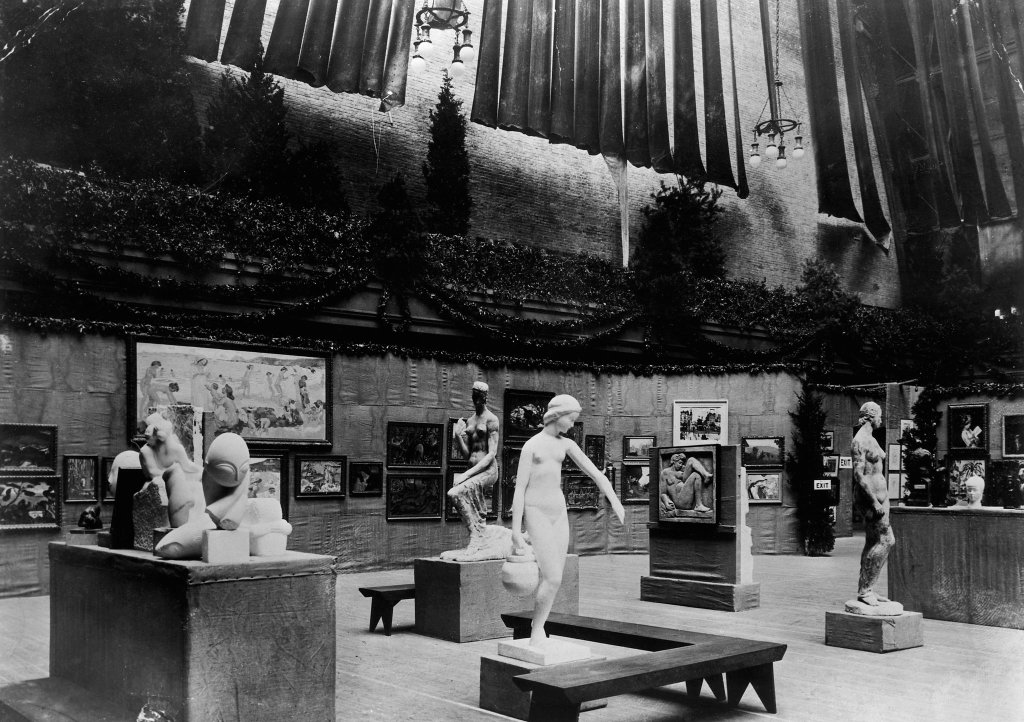
1913 Armory Show
As the early 20th century progressed, the impact of European Modernism began to find its way into American artistic circles. Influences from movements such as Impressionism, Cubism, and Futurism encouraged American artists to experiment with form, color, and perspective. A landmark event in this shift occurred in 1913 with the Armory Show in New York City, where the bold works of European avant-garde artists were exhibited, inspiring American creatives to explore new artistic possibilities.
Transitioning from Realism to Abstraction
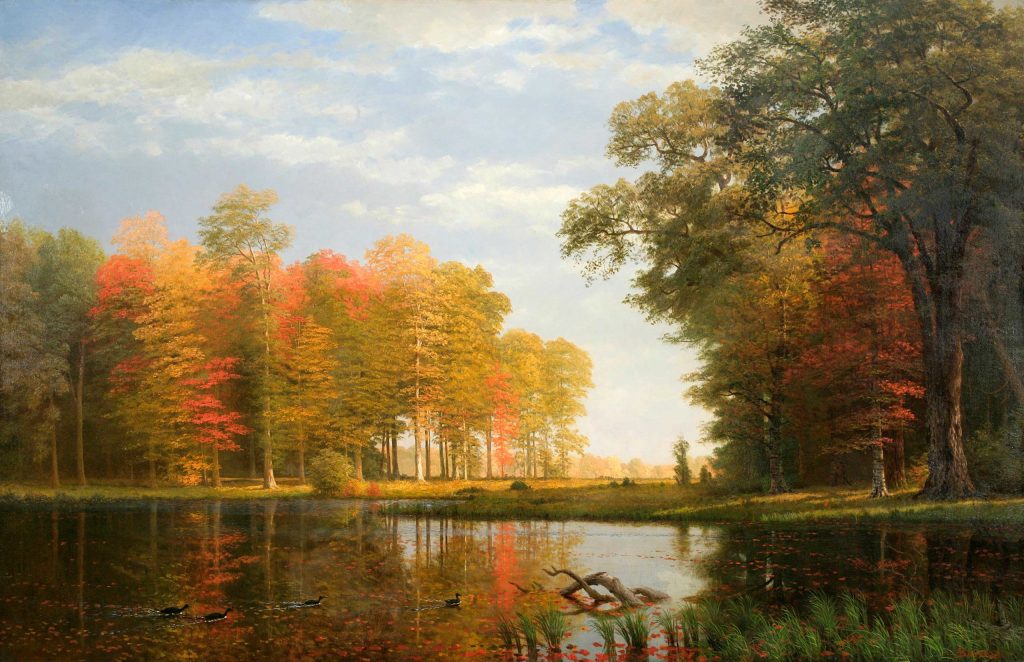
Albert Bierstadt (1830-1902)
Autumn Woods, Oneida County, State of New York, ca. 1886
Prior to the rise of Modernism, American art was predominantly characterized by Realism and the Hudson River School—a movement which emphasized detailed portrayals of nature and daily life. However, as Modernism took hold, many artists began to gravitate towards abstraction. This shift extended beyond mere visual change; it represented a pursuit of conveying profound truths and emotions.
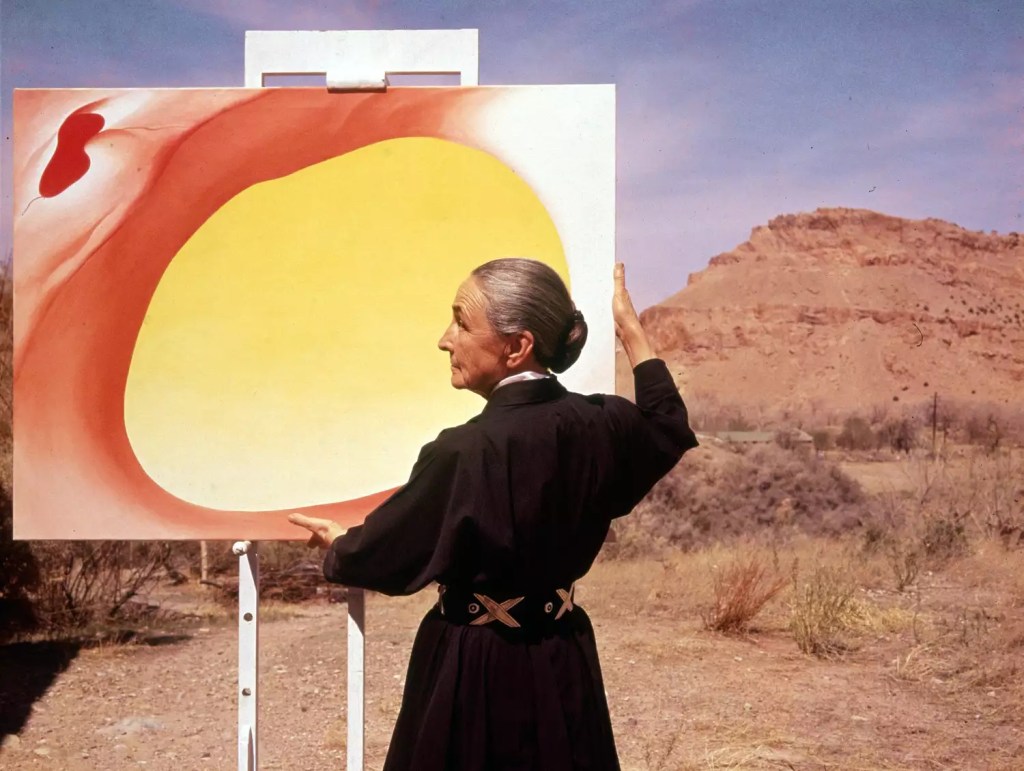
Georgia O’Keeffe With Pelvis Series- Red With Yellow, In Desert, NM.
Tony Vaccaro / Getty Images
Artists such as Georgia O’Keeffe, who reinterpreted natural forms into striking abstract shapes, and Stuart Davis, who combined Cubism with uniquely American subjects, embodied the spirit of a transforming nation, merging innovative techniques with distinctly American themes.
The early 20th century’s socio-political climate, marked by industrialization, the Great Depression, and two world wars, greatly influenced the shift towards abstraction in art. Industrialization led to feelings of alienation and disillusionment, motivating artists to seek new forms of expression beyond traditional realism. They turned to abstraction to reflect the complexities of modern life, capturing the fragmented nature of the working people’s experiences.
The Great Depression further intensified this need for innovation, as artists turned inward to explore personal emotions and the subconscious. However, it was the traumatic events of World War I and II that ultimately catalyzed the shift towards non-representational art. Artists, in an attempt to process social and emotional upheavals they experienced, broke free from traditional representation through abstraction and by embracing the emotional intensity of the modern world.
Post-War America: The Emergence of Abstract Expressionism
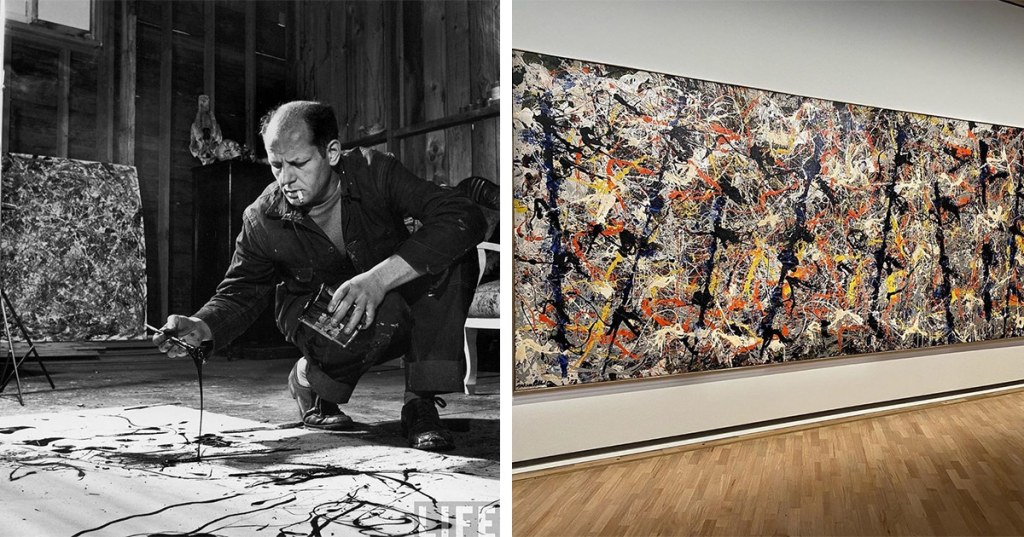
Jackson Pollock’s drip paintings
World War II was a crucial turning point for the American art scene. While Europe struggled to recover, the United States emerged as a cultural powerhouse. New York City became the epicenter of the art world, eclipsing Paris as the leading hub of artistic innovation.
During this time, Abstract Expressionism emerged, often regarded as the first truly American art movement. Artists like Jackson Pollock, Mark Rothko, and Willem de Kooning departed from traditional methods in favor of raw and spontaneous expression. Pollock’s drip paintings, for instance, prioritized the creative process over preconceived structure, transforming the canvas into a dynamic display of movement and energy.
This movement represented more than just a new art form; it symbolized America’s rising cultural autonomy. Abstract Expressionism captured ideals of freedom and individuality, resonating deeply in the Cold War context as the U.S. sought to position itself as a beacon of democracy and creative progress.
The Enduring Impact of Modernism on American Art
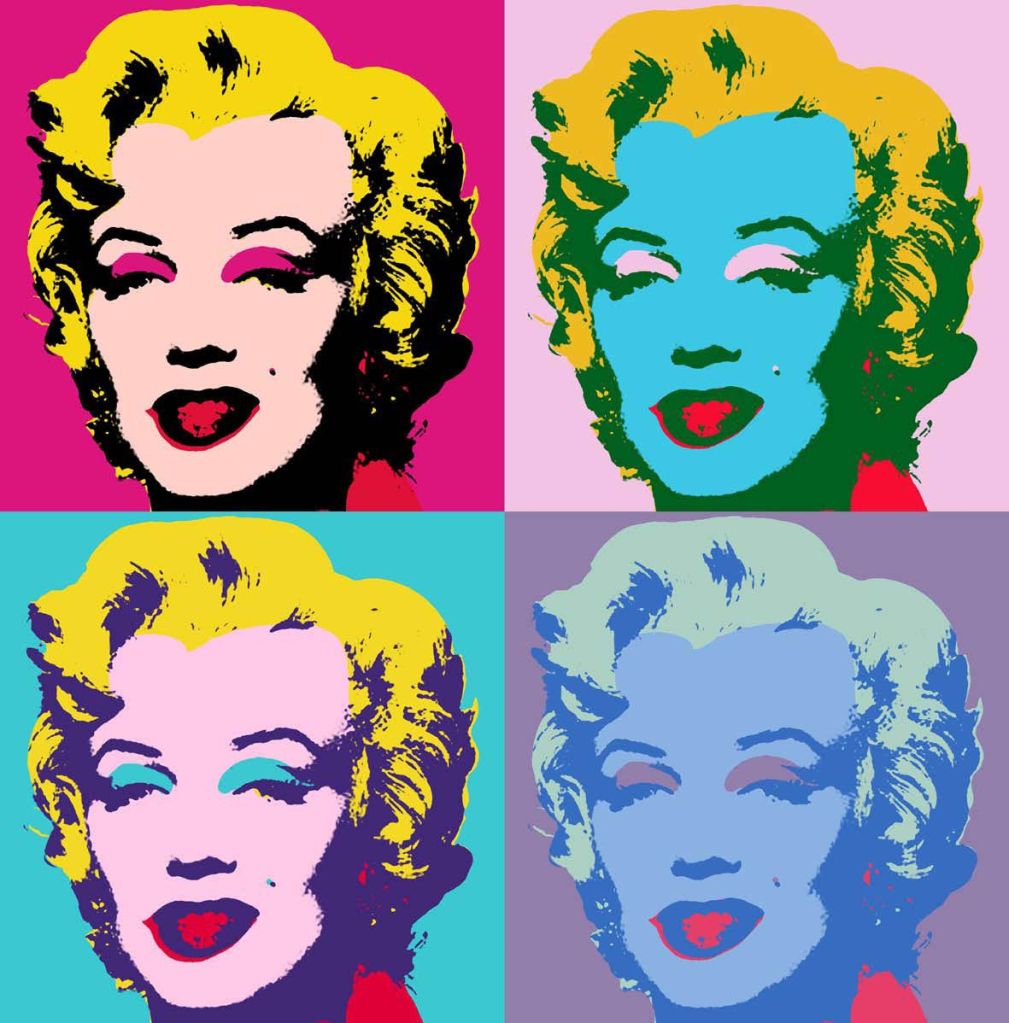
Marilyn Monroe, by Andy Warhol
Modernism’s legacy had a profound impact on the subsequent art movements of Pop Art, Minimalism, and Conceptual Art, each of which built upon and challenged the principles established by Modernist artists. Pop Art, emerging in the 1950s and 60s, took Modernism’s rejection of tradition a step further by incorporating mass media, consumer culture, and everyday objects into art. While Modernism embraced abstraction and formalism, Pop Art celebrated irony and the commercialization of culture, exemplified by figures like Andy Warhol who elevated mundane, mass-produced items to the status of high art.
Similarly, Minimalism and Conceptual Art reflected Modernism’s drive to break from the past, though with distinct approaches. Minimalism, with its focus on simplicity and geometric abstraction, continued Modernism’s exploration of pure form but pared it down to its most essential elements, rejecting the emotional expressiveness of previous movements like Abstract Expressionism. Conceptual Art, on the other hand, shifted the emphasis from the physical artwork to the idea behind it, aligning with Modernism’s desire for innovation while moving away from the focus on aesthetic or visual beauty. These movements collectively embodied the ongoing evolution of Modernist ideals, pushing boundaries and expanding the definitions of art.
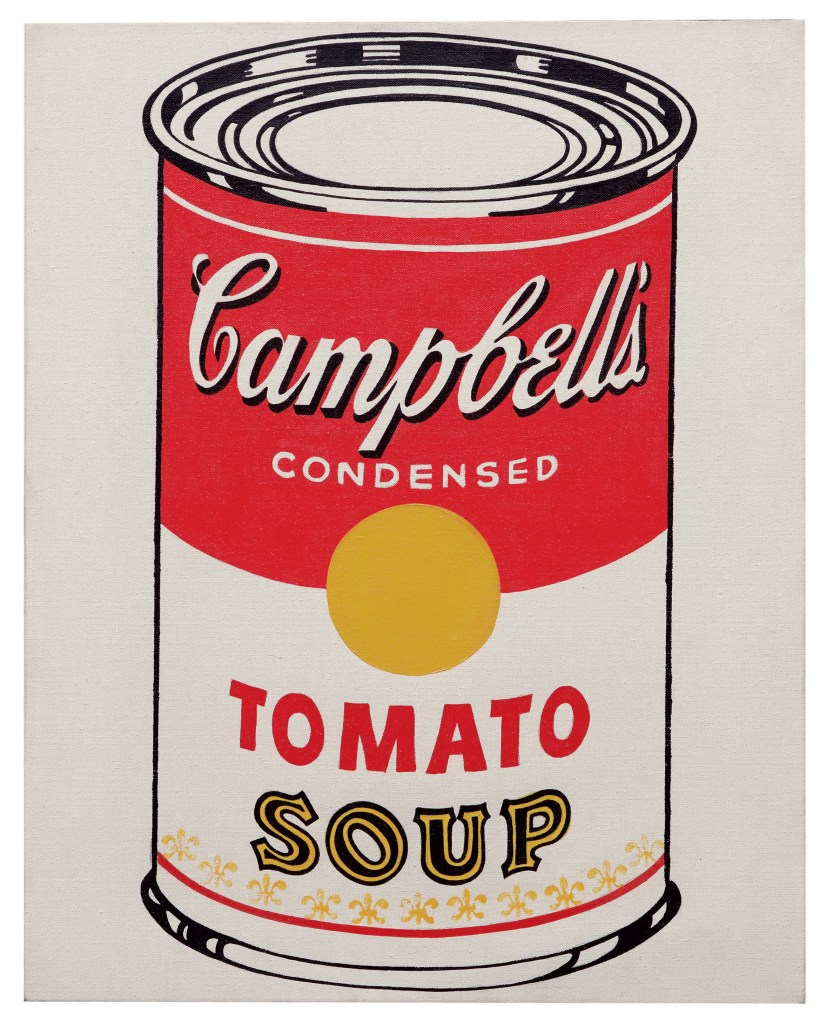
Campbell’s Soup, by Andy Warhol
The effects of Modernism on American art are undeniable. It set the stage for later movements such as Pop Art, Minimalism, and Conceptual Art, each challenging artistic boundaries in distinct ways. For example, Andy Warhol’s iconic Campbell’s Soup cans blurred the lines between fine art and consumer culture, prompting questions about the very nature of art itself.
Modernism also created space for a diverse array of voices and stories to emerge. By moving away from traditional forms, artists from varied backgrounds began to explore issues of identity, race, and gender, using Modernist concepts to share their personal narratives.
Conclusion
From its roots in the bustling environment of industrialization to its evolution into transformative movements like Abstract Expressionism, Modernism has significantly influenced American art and culture. It expanded the definition of art to encompass not just representation but also emotion, abstraction, and innovation.
Today, modernism’s legacy continues to motivate new generations of artists to defy conventions and redefine creativity. In an ever-changing world, Modernism stands as a potent reminder of the value of innovation, illustrating that art, like society, flourishes through the courage to explore the unknown and create new avenues.
 Culterate Blog
Leave a comment