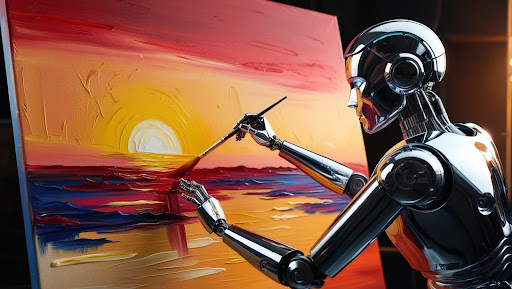
Whether in digital galleries, book covers, advertising, or even traditional art, artificial intelligence is already part of our world. For some, it is a tool that enhances creativity—a silent collaborator offering extra help when inspiration fails. Others, however, view this little extra help with skepticism. The debate surrounding AI in creative fields is both valid and ongoing. Ultimately, it boils down to a single question: where does inspiration end and appropriation begin?
The Fascination (and Problem) of AI Art
There is something interesting about AI-generated art. Today, programs like Midjourney and DALL·E can create stunning visuals in mere seconds—simple or complex designs that would take a human weeks to create. While it’s not perfect or revolutionary, it’s good enough. Enough to infiltrate everyday content, replacing what previously required skill, time, and patience, into a single click.
But here’s the major problem: AI doesn’t create from nothing. It learns and consumes vast amounts of art created by real people, over years of effort and dedication, often without their consent. Many of these artists never had the opportunity to grant or deny permission for their work to be used in this way.
Imagine spending years refining your own art style, only to have an AI model replicate it in seconds without giving you any credit or compensation. For many artists, this is not just an ethical dilemma. It’s personal.
On the other hand, AI does not require any technical expertise. With the right tools, anyone can create their own art pieces. This can make life easier for small business owners, students or curious people.
Therefore, AI-generated art is not about expertise or skillset, rather the democratization of creativity. In this digital age, if you’re online, the canvas is yours. And this raises a difficult question: who is the real owner of that art piece?
The legal system is still trying to keep up with this new reality. As lawsuits pile up, with artists demanding more transparency and accountability, technology advances faster than the laws attempting to regulate it.
What Next?
AI art is helpful and welcome, but it must originate from a foundation of consent, proper attribution, and compensation. We’re talking about a powerful tool, that won’t stop existing and won’t stop learning and amazing us, but it should help artists, not double-cross them. If we don’t address these issues now, we risk seeing the art world change in categorical ways.
We have the power to make a difference. Choosing between artificial intelligence and human work is a decision that directly impacts artists. As internet users, we can promote a culture that values and respects human creativity, ensuring that artists are recognized and compensated for their talent.
Because at the end of the day, art isn’t just pixels and brushstrokes. It is expression and emotions. And no machine, no matter how advanced, can take that away from us.

Vivian Loreti
AUTHOR
Vivian is a writer, designer, and art enthusiast. She has a knack for turning her intrusive thoughts into paper craft and her daydreams into stories. She’s taken a few wrong turns, chased ideas down dead ends, and occasionally forgotten why she walked into the room, but it all somehow ends up on a piece of paper. She loves all things creative and can’t wait to share what’s brewing in her mind.
 Culterate Blog
Leave a comment