
Introduction
In an age where connectivity promises liberation yet often fosters new forms of constraint, the pursuit of personal autonomy has become a central theme in modern discourse. The notion of autonomy, deeply rooted in philosophical thought, challenges us to navigate the intricate balance between freedom and purpose in our lives. This exploration delves into how existentialism, Stoicism, and postmodernism offer unique perspectives on autonomy, shaping our understanding of what it means to be free in contemporary society. Philosophy, far from being an academic relic, remains a vital tool for those seeking to carve out a life of authenticity and self-governance amidst the complexities of the modern world.
Existentialism — Crafting Your Own Essence

Existentialism, notably through the works of Jean-Paul Sartre, presents the radical idea that ‘existence precedes essence’, as outlined in his seminal work, Being and Nothingness (1943). This philosophy suggests that humans are not born with an innate purpose; rather, they must forge their own through choices, actions, and the acceptance of the inherent freedom that comes from this responsibility (Sartre, 1943).
In the modern context, this translates to individuals rejecting societal scripts to authentically craft their life’s narrative. The digital age, with its myriad career paths and lifestyles, exemplifies this existential autonomy. For instance, the gig economy allows people to pursue passion projects or unconventional careers, embodying Sartre’s call to ‘condemned to be free’ by choosing one’s path in a world without predefined meaning.
Stoicism – Mastery Over the Self
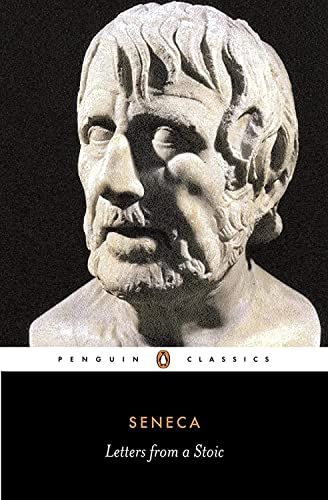
Stoicism, an ancient philosophy revived in contemporary discourse, advocates for autonomy through internal freedom. Philosophers like Marcus Aurelius in Meditations and Seneca in Letters from a Stoic argue that one’s true freedom lies in mastering one’s mind and responses to external events, not in external conditions themselves (Aurelius, 180; Seneca, 65 AD). This perspective shifts the focus from controlling the outside world to cultivating inner resilience, emphasizing reason, self-discipline, and acceptance of what cannot be changed. By perceiving challenges as opportunities for growth rather than obstacles, Stoics develop emotional fortitude, allowing them to navigate adversity with clarity and composure.
This concept of autonomy is particularly relevant in today’s fast-paced, stimulus-saturated world. Practices like mindfulness and minimalism reflect Stoic ideals by focusing individuals on what they can control – their perceptions, emotions, and reactions. By adopting these practices, modern individuals assert autonomy by choosing simplicity over excess or peace over chaos,embodying what Stoics describe as “living according to nature” – an alignment with one’s rational self over external pressures.
Postmodernism – Freedom in Narrative

Postmodern philosophy, with thinkers like Jean-François Lyotard in The Postmodern Condition (1979), disrupts traditional concepts of truth and narrative, suggesting that autonomy can be found in how we interpret or construct our realities. Postmodernism views culture as a collection of narratives or ‘language games’, each with its own rules, and autonomy as the ability to engage with or even create these narratives (Lyotard, 1979).
This philosophy resonates in contemporary society through practices like personal branding on social media or the choice of lifestyles that defy traditional norms, where individuals curate their identity in a world of cultural constructs. Here, freedom is not just about escaping external constraints but about choosing which cultural stories to tell about oneself, highlighting a modern form of autonomy where one’s narrative is both a personal and public act of self-definition.
Conclusion
The quest for autonomy in modern life is profoundly shaped by philosophical inquiry. Existentialism encourages us to define our essence through our actions, Stoicism teaches control over the self as the path to freedom, and postmodernism offers the freedom to construct our narrative in a culturally saturated world. Together, these philosophies provide a framework for understanding autonomy not just as freedom from external dictates but as the active creation of one’s life through choice, reflection, and narrative. In navigating the complexities of the 21st century, these philosophical insights guide us toward living with intention, authenticity, and perhaps most crucially, freedom.
In a world where the lines between connection and constraint are blurred, philosophy offers not just a lens but a map for those seeking to reclaim autonomy in both personal and societal contexts. How will you employ these philosophical insights to navigate your journey towards true autonomy?
References
Aurelius, M. (180). Meditations. (Translated by George Long, 1862). New York: Dover Publications.
Lyotard, J.-F. (1979). The Postmodern Condition: A Report on Knowledge. (Translated by Geoff Bennington and Brian Massumi, 1984). Minneapolis: University of Minnesota Press.
Sartre, J.-P. (1943). Being and Nothingness: An Essay on Phenomenological Ontology. New York: Philosophical Library.
Seneca, L. A. (65 AD). Letters from a Stoic. (Translated by Robin Campbell, 1969). London: Penguin Classics.

Refilwe Queen
AUTHOR
Refilwe Queen is a passionate freelance writer dedicated to exploring the complexities of human existence through her work. She brings a fresh perspective to storytelling, blending creativity with thoughtful analysis to create content that engages and inspires. Driven by an insatiable curiosity, Refilwe seeks to uncover new ideas and share insights that encourage others to think deeply and live authentically.
 Culterate Blog
Leave a comment