
Psycho (1960)
Dark castles, ghosts rattling chains, and quicksand. Classic ingredients for a good old-fashioned horror story. But, like every recipe, horror is also not static. Over time it crumbles, learns from its ups and downs, and remodels itself.
Horror evolves with our fears.
When Gothic mansions and carriages were a thing, a ghost trapped in a castle was the apex of terror. It was scary because it felt real, in some mansion near you.
Today, centuries later, while we still appreciate gothic horror, that’s not what’s likely going to haunt our nights. We fear what could happen to us.
Once Upon a Time in a Haunted Castle…

Frankenstein (1931)
In the 1700s, horror fiction was all about atmosphere. Horace Walpole’s Castle Otranto, a seminal book which basically invented the Gothic novel, captivated readers with its secret passages, ancient curses, and mysterious figures lurking in the dark. It was a complete commotion. People were terrified with the mysteries that were in the shadows, the unknown dangers of the darkness.
Then Mary Shelley’s Frankenstein introduced the idea that perhaps science could go too far, and suddenly we were terrified of our own ability to create monsters. You see, we’ve gone from passive-vessels to active-vessels of a greater evil. The sin was potentially within us.
(Spoiler: That fear never went away. The Substance is a good example of recycled fear.)
But it was Edgar Allan Poe, who basically said: What if the scariest thing isn’t the supernatural, but, like… your own brain?
And boom! Psychological horror was born.
Things Got Existentially Terrifying
In 1900, horror became more existential. H.P. Lovecraft’s idea was that true horror was the fact that we were just tiny, insignificant particles in a cosmic universe full of ancient monsters, which would leave us on the brink of madness and decadence. The universe is vast and we should never try to get to know it better.
At the same time that it became more distant and existential, horror, little by little, also stopped being just about where scary things happen and began focusing on who they happen to. The location seemed to be less relevant, while the people involved captured the spotlights.
The Haunting of Hill House by Shirley Jackson asked: What if the real ghosts are in our heads? And Psycho, by Robert Bloch, stated: The real monster could be that very nice guy next door.
So now, monsters came out from under the bed, and were among real people. And that’s when horror becomes really disturbing.
Real-Life Monsters
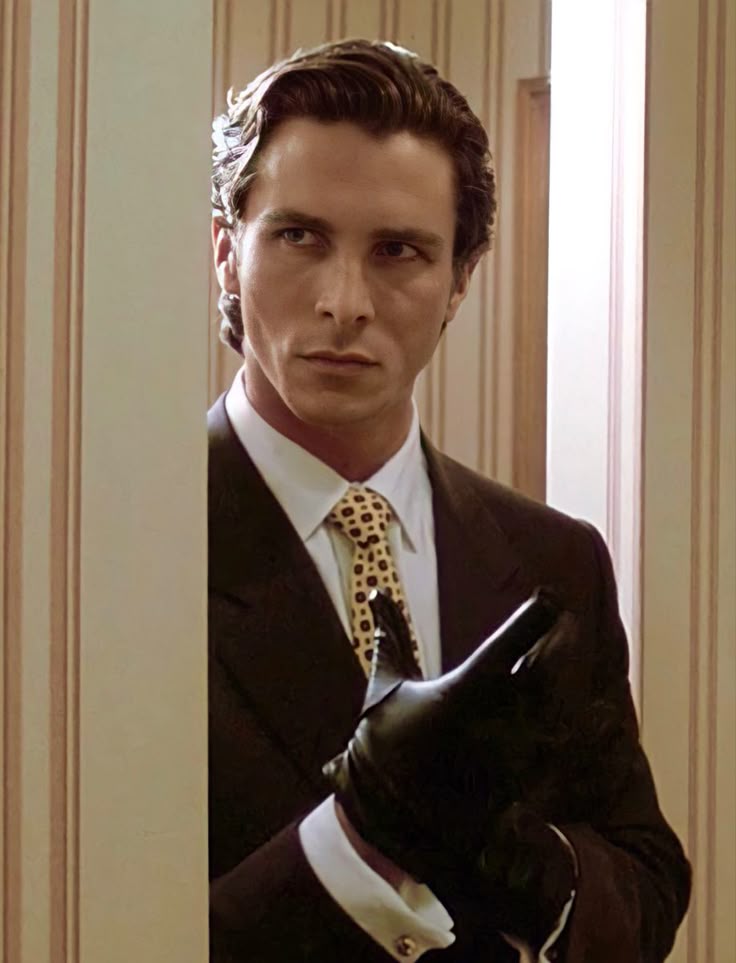
American Pyscho (1991)
From the 80s through to 90s, horror increasingly moved away from the haunted castle recipe. Our recent fascination with serial killers grew into an obsession. Patrick Bateman (American Psycho) and Hannibal Lecter (The Silence of the Lambs) became the new faces of horror, without fangs, capes or rotten flesh. They wore suits. They worked. They mingled. They were (on the surface) ordinary people. That’s exactly why they’re scary to this day.
Welcome to Horror 2.0: The 21st Century and the Fear of Everything
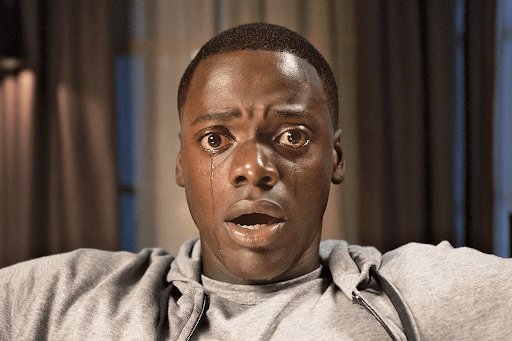
Get Out (2017)
Today, horror is a mirror for society. Modern horror stories aren’t just about scaring you anymore; the goal is to make you think.
Jordan Peele’s Get Out takes psychological horror and turns it into a critique of racism, revealing the disguised horror that permeates social structures. In Hereditary, we delve into the depths of family trauma and the legacy of disturbing secrets, exposing how the suffering of past generations creeps in and destroys those who try to escape it.
And themes such as technology increasingly enter our imagination and fiction. Surveillance, AI, deepfakes, the Internet’s ability to ruin lives overnight: real-life ghosts, one click away from you. In Searching… (2018) we see the digital world transforming into a psychological thriller, following a father’s desperate search for his missing daughter through her online footprint.
Horror is about making us feel something—dread, unease, the creeping suspicion that the world is not as safe as we want it to be. As the world evolves, so does horror. It’s changing day after day, following our own fears and real-life stories.
We don’t need to invent monsters anymore.
We’ve got plenty already.

Vivian Loreti
AUTHOR
Vivian is a writer, designer, and art enthusiast. She has a knack for turning her intrusive thoughts into paper craft and her daydreams into stories. She’s taken a few wrong turns, chased ideas down dead ends, and occasionally forgotten why she walked into the room, but it all somehow ends up on a piece of paper. She loves all things creative and can’t wait to share what’s brewing in her mind.
 Culterate Blog
Leave a comment