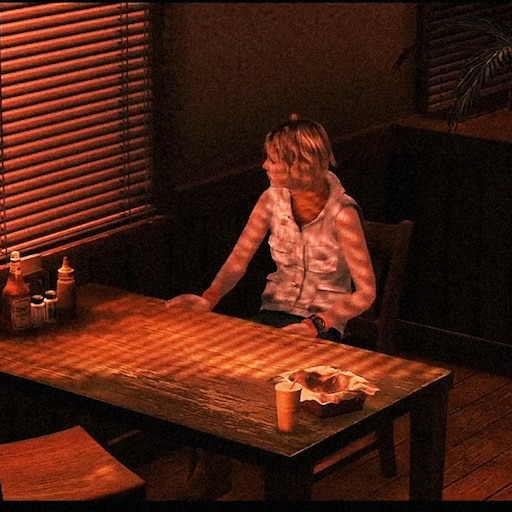
The discussion surrounding video games as a form of art is ongoing, with many arguing for the validity of this connection. Gamers and advocates for the medium strive to defend the idea that video games can be considered art against the skepticism of traditional art connoisseurs. To cite Roger Ebert’s claims:
“No one in or out of the field has ever been able to cite a game worthy of comparison with the great poets, filmmakers, novelists and poets.”
This concept seems to solidify the conversation, suggesting that video games can never be considered art, or at least that, in their current state, it’s impossible to view video games as one of the many forms of artistic expression.
But this recollection is pretty ignorant of the vast array of video games available that offer depth through their multimedia approaches.
To demonstrate this, we’ll take case studies of two video games that effectively illustrate the artistic potential video games have, challenging the ideas that often marginalize it as a legitimate form of art.
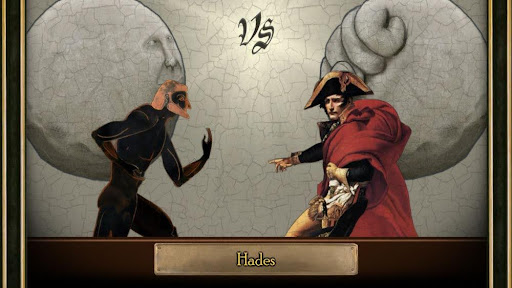
Rock of Ages. Source: Steam.com
Defining Art in Video Games
To properly introduce this topic, it’s essential to clearly define what art is. According to Oxford Languages, art is “the expression or application of human creative skill and imagination, (…), producing works to be appreciated primarily for their beauty or emotional power.” Plato viewed art as the imitation of the physical world, while Aristotle believed that art also aimed to capture universal truths by representing the inward significance of things. Additionally, Tolstoy defined art as the conveyance of feelings one has experienced to others, who, in turn, are affected by these feelings and share in the experience. In other words, art is an empathetic and cathartic experience, made possible through the use of signs.
Definitions of art can vary widely. We can consider these definitions individually or collectively to form a more comprehensive understanding of what art truly is. For the purposes of this article, we will define art as the creation of works that strive to capture meaning and evoke catharsis in the viewer.
Different mediums manage to generate artistic value by bringing emotional impact to audiences through thematic depth or aesthetic design.
Painting, sculpture, architecture, literature, music, theater, and cinema. These are some of the expressions considered art in the modern era—sometimes even photography is included! But video games are mostly dismissed and not included within these expressions, mainly because the “game” part tends to overshadow their creative potential, and in a sense, it’s true!
Video games are primarily just that—games. While a chess set can possess artistic value if the pieces are crafted with mastery and intent, the game itself is not inherently artistic; it’s a science of strategy. In other words, a game holds artistic potential, but its essence is not art, much like how carpentry is not necessarily an art form, even though it can transcend into sculpture. The same applies to film.
It could be argued, however, that video games inevitably work alongside the arts, visual, musical, and narrative. As a piece of multimedia, it requires a bit of everything to create one thing.
Earliest video games were probably more rudimentary and had less potential of developing artistic value, yet still took what few resources it had as a medium and provided players with endless entertainment by using creativity and ingenuity. This was especially true by the time of the arcade and the console wars.
Modern video games, on the other hand, have the ability of taking full advantage of the medium, creating pieces that can be elevated as intrinsically artistic by all the dimensions combined into a single game—storytelling, visual design, audio design, and performance, all intertwined with the interactivity that games are known for.

Stray. Source: CNN.com
Case Study 1: Silent Hill 2 – Psychological Horror as Artistic Expression
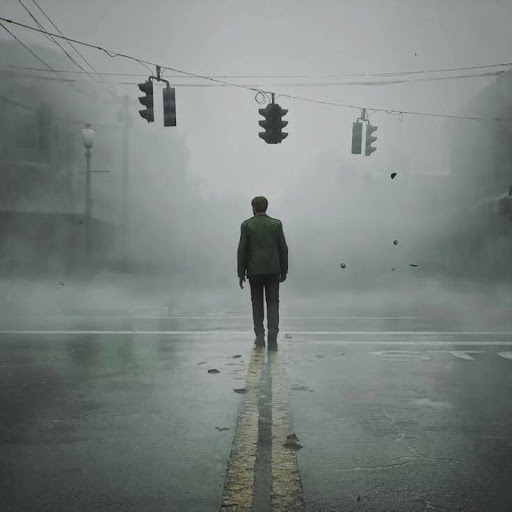
In my restless dreams, I see that town. Silent Hill.
The haunted place where fog immerses the player into a bloodcurdling experience, Silent Hill is a saga of video games that surround the homonymous town. The first four games are the most beloved of the entire saga, with Silent Hill 2 (2001) standing out as the most renowned. This installment delves deep into the psyche of its characters, offering a disturbing exploration of psychological horror and emotional depth, which contributes to its lasting impact and reputation in gaming history.
In order to explore the profound nature of Silent Hill 2, it’s necessary to dive into the story as profoundly as possible, so beware of spoilers.
Silent Hill 2 follows our protagonist James Sunderland, who receives a letter from his late wife Mary, claiming to be in the town of Silent Hill. Driven by his desperation to see her again, James ventures into the town, despite the fact that Mary died three years earlier from a disease. Once a charming tourist destination, Silent Hill is now shrouded in darkness and haunted by strange monsters.
In his Dantean quest to find Mary, James will encounter a set of people: Angela, a young woman desperately searching for her mother; Eddie, a teenager fleeing from an unnamed threat; Laura, a little girl who appears to have a mysterious connection to Mary; and Maria, a woman who looks just like Mary, except her clothes and behavior exude more sensuality.
Narratively, the story is told like a movie, with carefully crafted shots that convey essential details of each scene. Skillful use of Dutch angles evokes a sense of discomfort, while other carefully chosen perspectives imbue the player with unsettling sensations throughout.
While having technical limitations at the time it was created, the craft of the video game comes through as the cinematography is creative and experimental enough to provide the player with a beautifully haunting experience.
The soundtrack, created by Akira Yamaoka, dances in the line between horror and beauty. The music and silences are skillfully intertwined, creating a fitting accompaniment to the main character’s emotional state.
The heaviest aspect of the game is its storytelling, symbolism, and atmosphere, all designed to create an emotionally rich and interpretable experience. The interactivity of the medium plays a crucial role in constructing the meaning behind each element of the game.
The piece manages to properly explore, with a delicate pacing, its themes regarding guilt, grief, denial, and depending on the ending, self destruction or liberation.
The great thing about Silent Hill 2 is that not everything is explicitly conveyed in the game; much of it requires interpretation from the player. This depth encourages the audience’s attention and active engagement with the story, allowing them to uncover the meanings behind what appears on screen.
(Spoiler territory) As the story unfolds, we learn that Mary’s disease deeply affected James, driving him to the brink of hatred towards his wife. The verbal abuse, coupled with his unpredictable mood swings, intensifies the suffering they both endure, especially with death looming ever closer. In this environment of despair, James begins to project the various monsters that inhabit the town, transforming Silent Hill into his own personal hell he must go through before uncovering the truth behind Mary’s death.
The incredible balance of all aspects of the multimedia platform in Silent Hill 2 creates a memorable experience that many players wish they could relive for the first time. The game is full of corners possible for analysis, particularly regarding the psychology behind the characters’ motivations and the depths of its worldbuilding.
Because of that, Silent Hill 2 has been rewarded with becoming the first one of the Team Silent’s saga to be turned into the critically acclaimed remake in 2024, which captures the heart and the dread of the original, all thanks to a passionate team willing to tackle such a difficult task.
As a result, Silent Hill 2 has become the first entry in Team Silent’s saga to be transformed into a critically acclaimed remake in 2024 which captures the heart and the dread of the original, all thanks to a passionate team willing to tackle such a difficult task.
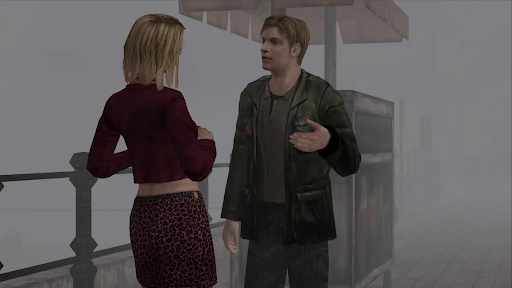
James meets Maria. Source: Silent Hill 2
Case Study 2: The Talos Principle – Philosophy and Meaning in Interactive Media
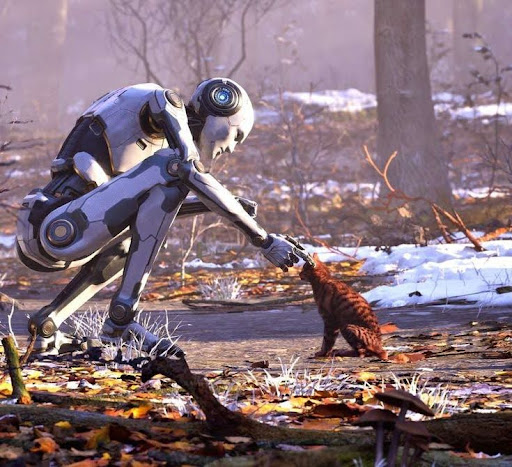
In 2014, Croteam launched a video game that was so deeply philosophical and thought-provoking that many others in the medium are yet to achieve a similar level.
The Talos Principle invites players to solve puzzles reminiscent of those found in the Portal series. It begins with an android positioned in a garden by an entity named Elohim.
Elohim, an omniscient figure akin to the Christian God in the Book of Genesis, instructs the android that it is free to explore the world as long as it doesn’t enter the tower. Throughout the game, a computer engages the main character and the player in philosophical conversations, questioning their belief systems and planting doubt about Elohim’s world and words.
The android is created in a way that mirrors human origins, paralleling the biblical account of God creating humans in his image, thereby establishing a foundation for exploring the experiences of both humanity and artificial intelligence.
The narrative of The Talos Principle reveals that the protagonist exists within a simulated world. It emphasizes that doubt is essential for transcending this environment and evolving into a self-aware being with true free will.
Milton, a computer designed to provoke doubt, challenges every aspect of the player’s belief system through thought-provoking conversations. It underscores the idea that doubt is a necessary evil, or not so evil companion to achieve freedom and uncover the truth about the world around us.
But the biggest question the game poses is regarding humanity—what it means to be human, the fragile nature of our beliefs and theories, leaving us with an internal debate on the purpose of the human condition. Coupled with a captivating musical score and stunning visuals, the game creates an immersive experience that elevates these existential themes.
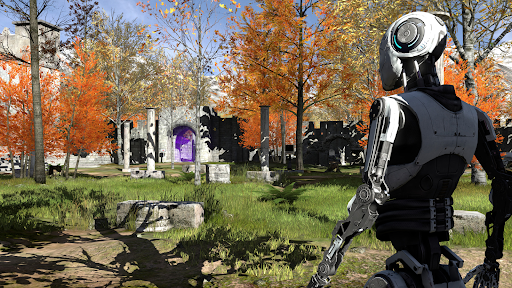
The Talos Principle. Source: Steam.com
The Unique Artistic Power of Video Games
Modern art transcends the simple relationship between artist and audience; it invites interpretation and requires the viewer to engage actively in the artwork’s lifecycle.
This dynamic is especially evident in video games which essentially are the embodiment of postmodernism. Nothing can engage audiences as dynamically as video games, which include the players as a part of the story, making the experience personal and unique to every individual who plays them.
As we could see by the likes of Silent Hill 2 and The Talos Principle, through their combination of narrative, visual artistry, music, and interactivity, can create experiences just as powerful as traditional art forms.
Looking back at the definitions of art we saw above, it’s clear that both of these pieces of media check the boxes. They embody expressions of human creative skill and imagination, evoking beauty and emotional depth. Both aim to capture universal truths while imitating the nature of human existence.
They encourage audiences to explore meaning and significance, adopting an empathetic approach that creates a cathartic experience in their characters—and, consequently, in the players themselves.
Video games, while primarily designed for entertainment, possess the remarkable ability to evoke profound emotional responses in their audiences. This potential is precisely why we should view them as more than mere entertainment; they deserve recognition as a medium in which art can flourish.
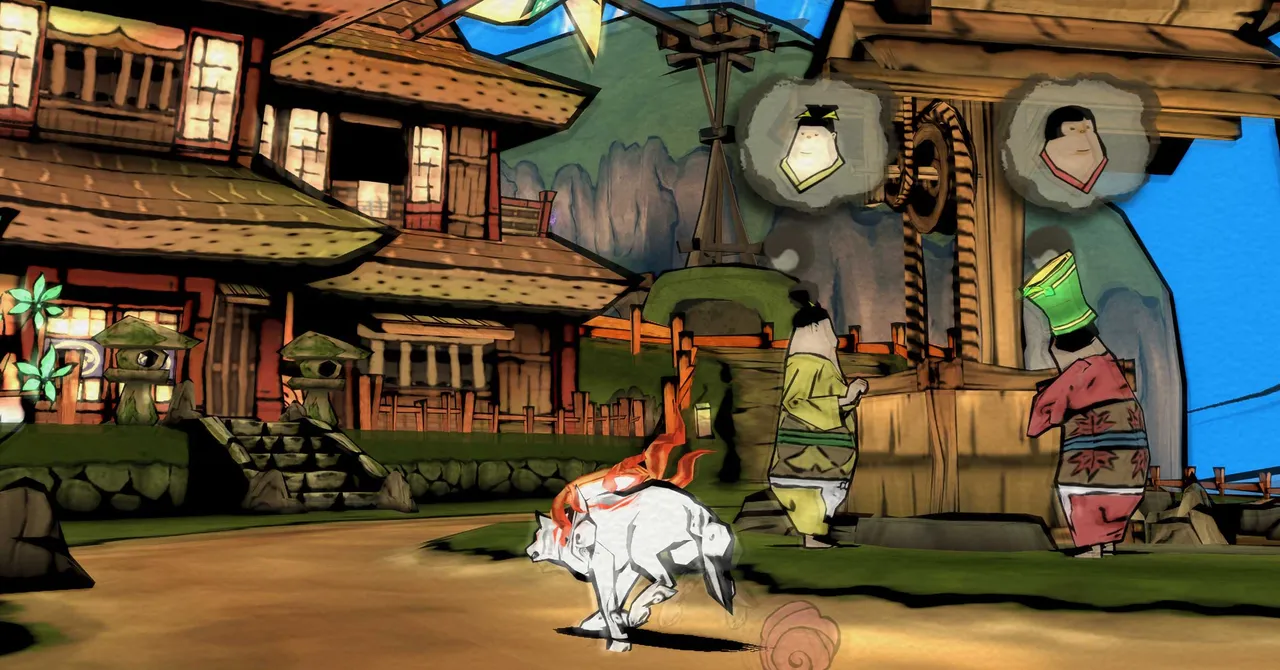
Okami. Source: Wired.com

Catalina Jahnsen
AUTHOR
Catalina is a scriptwriter, researcher, and communications professional with experience across the media landscape. A true jack of all trades, she has dedicated herself into various facets of the creative industries. Her journey reflects a passion for storytelling, a scholar perspective, and a deep bond to media and arts.
 Culterate Blog
Leave a comment