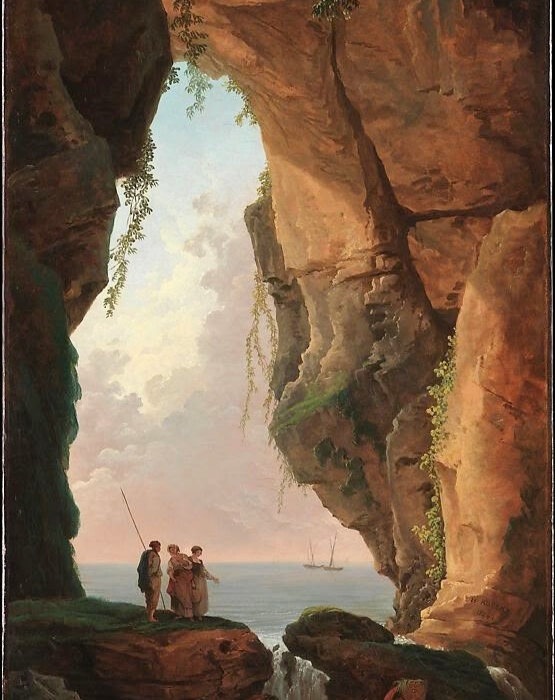
Hubert Robert, The Mouth of a Cave (1784)
The Metropolitan Museum of Art
Through darkness, humidity, legend and uneasiness, caves have become a column of humanity’s history and literature. But did they ever really hide treasures, as folklore suggests?
Caves: Myth and Shelter
In popular folklore, caves were often considered gateways to other worlds: those who ventured inside did so out of madness or desperation. They often provided refuge for bandits fleeing from justice and hermits eager to cast off the trappings of earthly life. Furthermore, caves were a symbol of religious conviction, as they were frequently home of mythical forces and creatures or sets of Marian apparitions.
Caves: Treasures and Literature
Some thousand years ago, a family ran from cold and pouring rain in the first form of shelter they could find: a cave. Dark, scary, dirty and humid but lifesaving. Through the dim light of fire, red painted fingertips traced figures on the dusty walls.
Some centuries later, archeologists still stand in amazement at those doodles drawn with root beer on half-torn walls and have no doubt: caves tell stories.
And so do humans. We’ve been telling stories since the beginning of time and, unsurprisingly, many of our stories feature caves.
The Odyssey by Homer, one of the world’s most studied and influential works in classical literature features caves more than once: most notably, a cave is home to Polyphemus. Caves also play a crucial role in other stories, such as in Agatha Christie’s Evil Under the Sun. In this novel, Arlena is murdered on the island where Poirot is vacationing. Near her body is Pixy’s Cave, where investigators discover heroin. Although the drugs serve as a red herring, the cave is pivotal to the plot. The victim has been manipulated by the murderer into hiding in the cave until the opportune moment to kill her.
Lastly, the pure nature of caves has been inspiring for many authors. Keats, for instance, loved any grot in the “deep-delvèd earth”. In his Endymion, the protagonist Endymion, tormented by amorous emotions, finds brief respite in the Cave of Quietude. “Happy Gloom! Dark Paradise!” We all need some time in a cave. “There anguish does not sting; nor pleasure pall.”
So, Did We Really Hide Treasures in Caves?
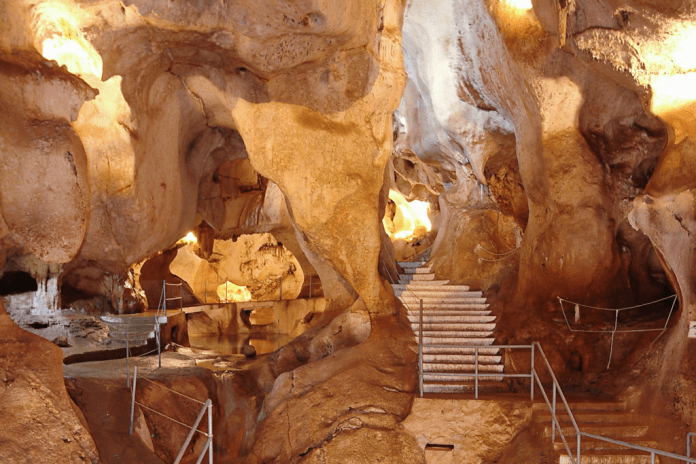
Cuevas del Tesoro
A common misconception, and cause for speculation and legend-making, the idea that we hid treasures in caves has no real evidence in history.
Still, a tendency to believe such stories has endured to this day. For instance, in 1847, a Swiss man named Antonio de la Nari died while setting explosives during his treasure hunt in the Cave of El Tesoro (The Treasure).
More recently, Manuel Lanza Palacio planned extensive research of the same cave, having heard the same legends as de la Nari. Despite employing geologists and archeologists among others, he did not come across what he had thought and hoped for. Though some “treasurable” items have been found by scientists, they were not the typical treasures one might expect—gold or a map to a secret stock of precious gems or coins; they were archeological artifacts: clothes, vases, shoes, a few pieces of jewellery, cave paintings, and human remains. While these items may not seem like treasures in the conventional sense, they hold immense value for history and science.
Conclusion
Many branches of anthropology are interested in how our relationship with caves has always been somewhat paradoxical: despite being refuge for the first human settlements, over the centuries their peculiar and sinister appearance fuelled all kinds of legends and superstitions labelling them as dangerous, uncomfortable, humid places to be avoided and feared.
Only recently have disciplines like archeology and speleology brought back human interest and fascination for caves as incredible places to be rediscovered and studied.

Sofia Ida Cestari
AUTHOR
Sofia Ida Cestari is an Italian writer and editor. Born in Northern Italy, she now resides in Spain and studies English Philology. She loves cinema, screenwriting, poetry and journalism and has been published in numerous magazines such as Culterate, Youth of Letters, The Psyche’s Pen, Viridine, Apotheca Journal and more. She also is the founder and editor in chief of Eloquentia Magazine. You may find her on Instragram @sofiaidacestarii
 Culterate Blog
Leave a comment