
Sufism, the mystical branch of Islam, has deeply influenced the musical traditions of Pakistan and India for centuries. Its emphasis on divine love, spiritual transcendence, and devotion has given rise to some of the most soulful musical expressions in South Asia. From qawwalis that echo in shrines to folk songs that tell tales of divine longing, Sufism has shaped the region’s musical identity in ways that transcend religion and borders.
Origins of Sufi Music
Sufi music in the Indian subcontinent dates back several centuries, to the medieval period, when Sufi saints used poetry and music as tools for spiritual awakening. Influenced by Persian, Arabic, and Turkish musical traditions, early Sufi practitioners integrated local folk and classical elements to create unique devotional melodies.
During the Mughal Empire, Sufi traditions flourished, with music becoming an essential part of spiritual gatherings. One of the most influential figures in this movement was Amir Khusro (1253–1325), a Sufi poet and musician credited with shaping the qawwali tradition by blending Persian, Arabic, Turkish, and Indian musical elements.
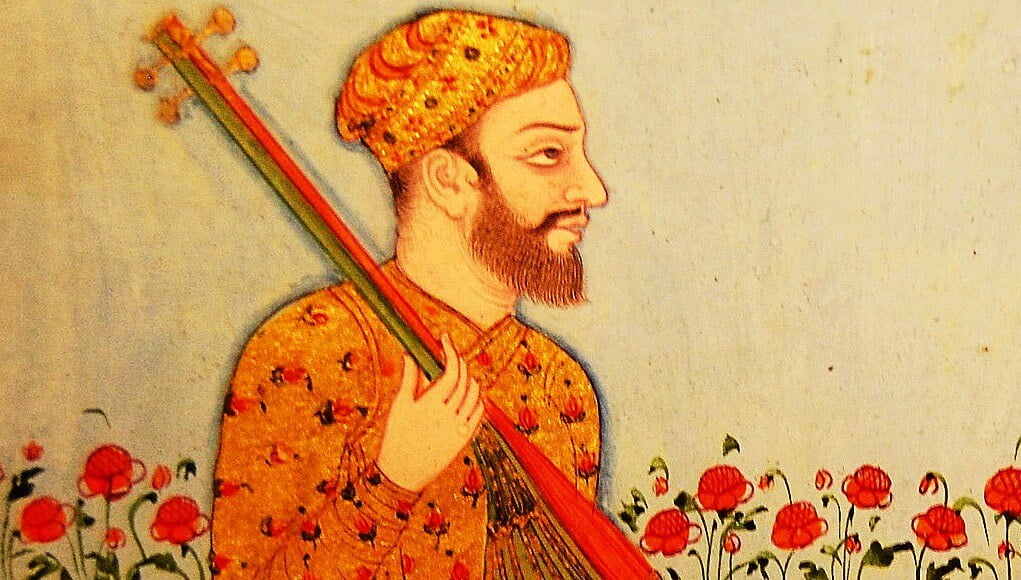
Amar Khusro
Photo: poshampa.org
Qawwali: The Soul of Sufi Music
Perhaps the most recognizable form of Sufi music, especially in South Asia is qawwali. It is a devotional genre that expresses love for the divine through poetic verses, powerful rhythms, and hypnotic melodies. Qawwalis are performed at Sufi shrines (dargahs), where musicians aim to elevate both themselves and listeners into a state of spiritual ecstasy.
Some of the most famous qawwals include:
- Nusrat Fateh Ali Khan – Revolutionized qawwali by bringing it to international audiences.
- Sabri Brothers – Pioneers of traditional qawwali in Pakistan.
- Abida Parveen – Known for her soulful renditions of Sufi kalaam (poetry).
Qawwalis like “Tajdar-e-Haram”, “Dum Mast Qalandar”, and “Man Kunto Maula” remain timeless, continuing to inspire millions to this day.
Modern Adaptations: Sufi Music in Contemporary Times
While deeply rooted in tradition, Sufi music is one of the few arts which has not only survived, but also evolved to embrace modern genres. Some popular examples include:
- Bollywood & Sufi Rock – Films have popularized Sufi themes in songs like “Kun Faya Kun” (Rockstar) and “Khwaja Mere Khwaja” (Jodhaa Akbar).
- Coke Studio Pakistan – A platform that has modernized Sufi music by blending it with rock, jazz, and electronic elements.
- Indie & Fusion Bands – Indian and Pakistani Bands and Artists like Junoon, Kailash Kher, and The Sufi Route are redefining Sufi music for new generations.
Sufism has left an undeniable mark on South Asian music, shaping the spiritual and artistic landscape of the region. Whether through qawwalis, ghazals, folk songs, or contemporary fusions, Sufi music continues to inspire, heal, and connect people across cultures and faiths. More than just a genre, it is a bridge between the earthly and the divine—a reminder that music, at its core, is an act of devotion and healing.

Mahnoor Tariq
AUTHOR
Mahnoor is a writer and designer with a deep passion for art, culture, and storytelling. She is dedicated to exploring overlooked narratives and bringing unique perspectives to light. Creativity is the driving force behind her work. When not writing, you can find her drawing, exploring new ideas, and immersing herself in the world of art.
 Culterate Blog
Leave a comment