“Reading has changed, is changing, and will continue to change the world.”
These words from Virginia Woolf, a British author known for her works such as Mrs. Dalloway and A Room of One’s Own, highlight the profound impact of reading on societies worldwide.
Many might think that reading influences only their imagination and is merely a form of leisure, but in reality, reading can be much more powerful than that.
Research from Sussex University found that reading can reduce stress levels by up to 68%. This conclusion was drawn by analyzing the heart rates of people holding a book in their hands and enjoying some time reading.
Additionally, a study conducted by Emory University revealed that readers are less likely to develop conditions such as Alzheimer’s or dementia. The research also indicated that our brains function differently while we read. When we read a scene in a book, we tend to imagine ourselves in that scenario, creating a sense of empathy and enhancing our understanding of others’ experiences.
Different genres can trigger various reactions in our brains. For instance, a tense story may evoke a different response compared to a sweet romance, possibly leading readers to become more engaged and eager to find out what happens next.
So, we can finish this part by understanding that reading protects our brain and has a healthy matter connected to its habit, which is beneficial to the longevity of the memory of our brain.

What reading means to those who read
Victor Hugo, the author of Les Misérables, preferred to write while standing, leaning against a table. In contrast, George Orwell, the author of 1984, enjoyed writing while lying down, seeking comfort in his writing position. Other notable writers with unique writing habits include Pablo Neruda, a Chilean poet, and Graciliano Ramos, a Brazilian author. Neruda liked to write with green ink, while Ramos preferred the early morning hours to hand write his books.
Despite their individual writing styles, these authors share a commonality: they were all avid readers. In his book On Writing, Stephen King, renowned as the master of horror and suspense, emphasizes that the first step to writing well is to read a lot.
As we saw in the previous part, reading offers numerous benefits for our brains and memory, but it also enhances technical skills such as writing. Exposure to various genres and narratives expands our critical thinking and enriches our writing repertoire, leading to more mature writing.
However, it’s important to remember that writing also requires practice and patience; reading should complement your writing journey. When you read, you engage in a form of communication—not just with the text, but also with yourself and the world around you.
Reading can be considered one of the most silent forms of communication. When you immerse yourself in a book and focus on the story, you stimulate your imagination, learn new vocabulary, and develop the ability to connect events logically—even if only subconsciously—while adding new references to your writing toolkit.
The ability to reflect and question is a valuable skill that writers can cultivate through reading. Therefore, for writers, reading is not only beneficial for mental health but is also crucial for developing writing skills and expanding vocabulary, references, and literary knowledge.

Tips that may help you to read better, without pressure
Reading habits vary across the globe, influenced by cultures and social opportunities, such as levels of literacy. These factors significantly impact people’s interest in reading.
While social media and internet access have democratized reading, they’ve also created pressure regarding what constitutes “good” reading. This can lead to the prevalence of certain reading patterns. Influenced by each other’s choices, we often gravitate towards trending books on social media, which can result in a focus on quantity—who reads more—rather than embracing personal preferences. The aim should be to encourage individuals to read what they truly enjoy and to share their thoughts about the stories they explore.
For writers, this is a much more important matter, because reading serves as a valuable study tool that helps develop technical skills. If you’re feeling overwhelmed and want to enjoy a book at your own pace, consider these three tips:
1. Choose a book you genuinely want to read.
Look for options online or at your local bookstore. If the cover or synopsis draws you in, don’t hesitate to give it a try. Allow yourself the chance to explore something new.
2. Focus on enjoying the reading experience rather than just finishing the book.
It’s more important to immerse yourself in the story than to rush through it. Instead of quickly flipping pages to reach the end, take the time to understand and appreciate the narrative being unfolded.
3. After finishing the book, share your thoughts.
Whether in a book club or with a friend or family member, recommend the book by highlighting what you enjoyed most about it. Was it the author’s writing style, a specific scene, or the themes explored? Articulating your impressions can help you reflect on what you learned from the book and how it may have influenced you.
These simple tips can help you reconnect with reading and understand its impact on your life. Remember, a book is like a cherished friend—it can heal or provoke deep reflections. Ultimately, reading transforms you, and for writers, it is the first step in discovering your own voice, references, and writing style.
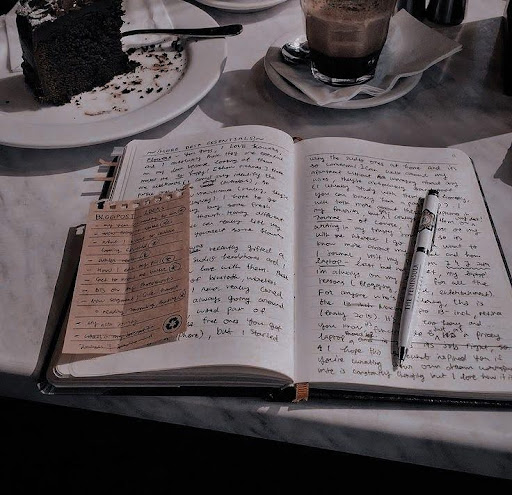
© Images from Pinterest

Moara Flausino
AUTHOR
Moara is a journalism student from Brazil with a passion for literature, poetry, and art. Since 2021, she has been working in writing and content creation, and she has two poems published in anthology books of poetry. Learning new things excites her, and she believes that embracing different forms of writing and expression is always inspiring. Her goal is to write as many stories as she can, sharing their uniqueness with the world.
 Culterate Blog
Leave a comment