There is something hauntingly intimate about art that was never meant to be shared—a kind of raw, unfiltered truth that escapes the performance of an audience. Before gallery walls, before critics and collectors, artists went through moments where they picked up brushes not for fame or legacy, but for themselves. For grief. For love. For solitude.
These are the works that feel like confessions. Like pages torn from a private journal. And in a world obsessed with visibility, they whisper to us from a place of stillness and secrecy and offer a look into the creator’s mind and deep hidden feelings.
1. Van Gogh’s Tree Roots (1890)
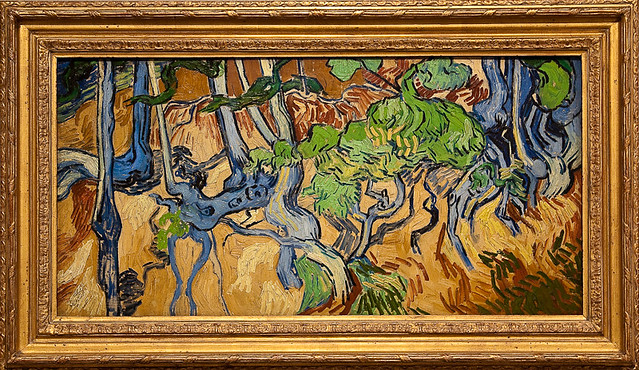
This chaotic, twisting cluster of roots was found on his easel the day he died. The painting contains no signature. No explanation. It is believed that this was his last painting—a coded goodbye, rendered not for a buyer or a brother, but for the void. The way the brightly colored roots seem to claw and tangle feel like a cry from inside his own mind.
2. Egon Schiele’s Sketches of the Dying (1918)

During the Spanish flu pandemic, Schiele lost his pregnant wife, and three days later, died himself. In the final days of his life, he drew feverish, intimate sketches—thin lines trembling across paper like final breaths. Each wild stroke had grief spilling out; by a hand which knew it didn’t have long to live. They weren’t signed, polished, or prepared for any show. They feel like unfinished thoughts, too tender and painful to be fully formed.
3. Leonardo da Vinci’s Sketchbook Pages

Though many celebrate the Mona Lisa and The Last Supper, the most intimate Leonardo’s work is found in his personal notebooks—a melting pot of various subjects like anatomical studies, philosophical notes, mechanical designs scribbled in mirror writing. These weren’t masterpieces for kings. They were curiosities of the mind, drawn in solitude by candlelight. These notebooks feel less like artworks and more like the inner workings of a restless mind. A man in conversation with himself.
3. Francisco Goya’s Saturn Devouring His Son (1819–1823)
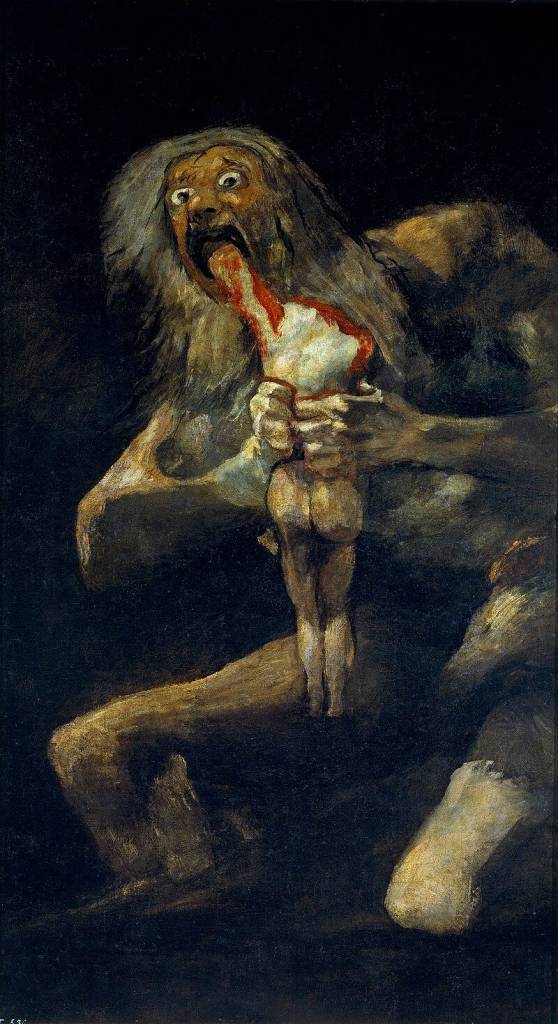
Saturn Devouring His Son is undoubtedly one of the most recognizable paintings of all time. Painted in the final years of Goya’s life, it was part of his “Black Paintings” series which were painted directly onto the walls of his own house. It features a dark, eerie image of a God eating his own son.
It is violent and unsettling, a direct reflection of Goya’s inner state in his final years as he suffered from aging, disillusionment, and isolation from society. This nameless painting is for certain something never meant for the public eye and rather as a materialization of himself.
In a world obsessed with visibility, these works remind us that not all art is made to be seen—some of it is simply made to be. To feel. And maybe, in their secrecy, these pieces hold a truth more honest than anything ever hung on a wall.

Mahnoor Tariq
AUTHOR
Mahnoor is a writer and designer with a deep passion for art, culture, and storytelling. She is dedicated to exploring overlooked narratives and bringing unique perspectives to light. Creativity is the driving force behind her work. When not writing, you can find her drawing, exploring new ideas, and immersing herself in the world of art.
 Culterate Blog
Leave a comment